Ranked & Reviewed · 7 services
Best Hardware Wallets
Seven hardware wallets ranked on list price, secure element, open-source firmware, air-gapped signing and asset coverage, scored from vendor stores, documents and GitHub repositories checked in November 2026.

By Dan Reyes · Last checked Nov 6, 2026
At a glance
| # | Service | Score | Best for |
|---|---|---|---|
| 1 |  Keystone 3 Pro | 9.6 | QR air-gapped signing with the widest asset coverage rated |
| 2 | 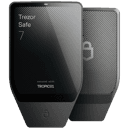 Trezor Safe 5 | 8.4 | Certified chip and fully open firmware at the lowest price |
| 3 |  Coldcard Q | 7.6 | Bitcoin-only signing with QR, dual microSD and two secure chips |
| 4 |  BitBox02 | 7.4 | Reproducible open firmware with published board files |
| 5 |  Coldcard Mk5 | 7.4 | Two-vendor secure elements and microSD air-gap for Bitcoin |
| 6 |  Blockstream Jade Plus | 7.0 | Fully inspectable code and cable-free QR signing for Bitcoin |
| 7 |  Ledger Nano Gen5 | 7.0 | Named EAL6+ secure element with broad asset support |
Best Hardware Wallets, ranked by score
The Keystone 3 Pro scores 9.6/10, the top hardware wallet mark, on desk research of Keystone's store, guides and GitHub. It takes full marks for chips, open code, QR signing and asset coverage. Price costs it a point, and its own sources disagree on the chip part numbers.
Pros
- Air-gap 10: QR-code signing with no cable or radio; USB optional
- Asset coverage 10: 5,500+ assets on 30+ chains, per Keystone
- Open source 10: firmware, hardware files and a build-and-verify guide on GitHub
- Secure element 10: three secure elements, per Keystone and its README
Cons
- Price 8: $149, with no microSD card and pre-order only on 1 Nov 2026
- Chip part numbers differ between Keystone's README and other published lists
- No certification level published for any of the three chips
- MH1903 vendor library ships as a precompiled binary, per the README
The Trezor Safe 5 scores 8.4/10 on desk research of Trezor's product page, chip explainer and GitHub repositories. A named EAL6+ chip, reproducible open firmware and a $109 price lift it to second. It signs only over USB-C, with no air-gapped route.
Pros
- Price 9: $109 on trezor.io, the lowest in the category, with two backup cards
- Secure element 9: OPTIGA Trust M (V3) named, Common Criteria EAL6+
- Open source 10: GPL-3.0 firmware, reproducible builds and Safe 5 schematics
- Asset coverage 9: thousands of coins and tokens, or Bitcoin-only firmware
Cons
- Air-gap 5: signing needs a USB-C connection; no QR or documented microSD path
- Sending, swapping, setup and device management unavailable on iOS
- Secure element firmware itself is not published, as with every chip-based peer
The Coldcard Q scores 7.6/10 on desk research of Coinkite's pages, store and GitHub. It takes full marks for its two-vendor secure elements, reproducible firmware and cable-free signing paths. A $369 list price and Bitcoin-only support hold it back.
Pros
- Air-gap 10: QR scanner, two microSD slots, and AAA battery power for cable-free signing
- Secure element 10: Microchip ATECC608 plus Maxim DS28C36B, two vendors
- Open source 10: Docker reproducible build, Q schematic and BOM on GitHub
- Full keyboard for entering long BIP-39 passphrases
Cons
- Price 4: $369 list ($319 on sale on 1 Nov 2026), the highest in the category
- AAA batteries and USB cable not included
- Asset coverage 4: Bitcoin only; Taproot and Miniscript need the Edge firmware
- July 2026 seed bug: seeds made before 1.5.0Q must be migrated (not scored)
The BitBox02 scores 7.4/10 on desk research of Shift Crypto's GitHub releases and shop listing. Its firmware is open, reproducible and backed by published board schematics. Its limits are a secure chip with no stated certification and USB-only signing.
Pros
- Open source 10: Apache-2.0 firmware, reproducible builds and PCB schematics
- Device shows a firmware hash at startup that matches published release hashes
- Price 8: EUR 124.17 when last checked, with optional microSD seed backup
- Multi edition covers Bitcoin, Litecoin, Ethereum and EVM networks, and Cardano
Cons
- Air-gap 5: every signature needs a USB-C link to the BitBoxApp
- Secure element 7: ATECC608B named, but no certification level published
- Asset coverage 7: a defined network list rather than thousands of assets
- Shop price could not be rechecked on 1 November 2026 (site returned 403)
The Coldcard Mk5 scores 7.4/10 on desk research of Coinkite's pages, store and GitHub. Its two-vendor secure elements and reproducible firmware earn full marks. Its $269 list price and Bitcoin-only scope hold it back, and July 2026's seed-generation bug sits outside the rubric.
Pros
- Secure element 10: Microchip ATECC608 plus Maxim DS28C36B, two vendors
- Open source 10: reproducible builds, Mk5 schematic and BOM on GitHub
- Air-gap 8: full microSD signing, with NFC PushTX and USB-C as options
- Seeds made on 5.6.0+ firmware require user entropy (keys, dice or coins)
Cons
- Price 5: $269 list ($219 on sale on 1 Nov 2026); USB cable not included
- Asset coverage 4: Bitcoin only, by design
- No QR camera and one microSD slot, so air-gapped signing means moving a card
- July 2026 seed bug: seeds made before 5.6.0 must be migrated (not scored)
Jade Plus scores 7.0/10 on desk research of Blockstream's product page, help center and GitHub repository. Its open code and QR signing earn full marks. It handles only Bitcoin and Liquid, and it uses an oracle-based virtual secure element instead of a chip.
Pros
- Open source 10: firmware, oracle server and schematics public, reproducible builds
- Air-gap 10: camera QR, SD card or USB drive signing, and air-gapped firmware updates
- PIN attempt counter sits on the oracle, which users can self-host
- QR-only users were not exposed to the 2025 host-side crash bug, per Blockstream
Cons
- Asset coverage 4: Bitcoin and Liquid only
- Secure element 5: no chip; Blockstream says the microcontroller isn't hardened silicon
- Unlocking with the PIN needs the blind oracle to be reachable
- Price 6: $169.99 with no backup accessory listed in the box
The Ledger Nano Gen5 scores 7.0/10 on desk research of Ledger's product, comparison, asset and open-source pages. It earns 9s for a named ST33K1M5 chip certified to EAL6+ and for asset support. Partly closed firmware and connected-only signing cost it most.
Pros
- Secure element 9: STMicroelectronics ST33K1M5 named, CC EAL6+ certified
- Asset coverage 9: 500+ assets in Ledger Wallet, thousands via third-party wallets
- Price 7: $179 with a Ledger Recovery Key card and three recovery sheets in the box
- Ledger Wallet, the Secure SDK and the on-device apps are public on GitHub
Cons
- Open source 5: low-level secure element code closed; no reproducible builds
- Air-gap 5: USB-C or Bluetooth only, with no QR or microSD signing path
- Product page showed no device-only price when checked; price from comparison guide
Best hardware wallets by use case
The seven devices split into two groups: multi-asset signers and Bitcoin-focused ones. Within each, the deciding marks are usually how you sign (cable, Bluetooth, QR or microSD) and what you can inspect.
- Many blockchains, signed without a cable: Keystone 3 Pro. It is the only device with 10 for both air-gap and asset coverage. It signs through QR codes and lists 5,500+ assets on 30+ blockchains by its own count. Its sources disagree on which three secure element chips it uses; the Keystone 3 Pro review sets out the conflict.
- A certified chip and rebuildable firmware at the lowest price: Trezor Safe 5. At $109 it is the cheapest device rated (price 9). It names an OPTIGA Trust M chip certified to Common Criteria EAL6+ (secure element 9), and its GPL-3.0 firmware has a documented reproducible build (open source 10). It signs only over USB-C (air-gap 5), and the product page says sending and setup are not available on iOS. See the Trezor Safe 5 review.
- Bitcoin only, with every cable-free route: Coldcard Q. It pairs two secure elements from different vendors with a QR scanner, two microSD slots and AAA battery power (secure element 10, air-gap 10). Its $369 list price is the highest in the category (price 4).
- Bitcoin only, at a lower Coldcard price: Coldcard Mk5. It has the same two chips and firmware as the Q, but signs air-gapped by microSD only, with no camera (air-gap 8). It lists at $269.
- Bitcoin plus Ethereum, EVM networks or Cardano, with fully inspectable firmware: BitBox02. The Multi edition covers a defined network list (coverage 7), and its Apache-2.0 firmware is reproducible with published board files (open source 10). It signs over USB-C only.
- Bitcoin and Liquid, with no closed chip in the key path: Blockstream Jade Plus. It signs over QR (air-gap 10) and has no secure element at all. A blind oracle server, which you can self-host, protects the PIN instead (secure element 5). See the Jade Plus review.
- A named EAL6+ chip, broad assets and a backup card in the box: Ledger Nano Gen5. It scores 9 for both its STMicroelectronics ST33K1M5 chip and its asset support, and ships with a Ledger Recovery Key card. Part of its firmware is closed and it cannot sign air-gapped (5 on both).
How the ranking works
Each device is marked from 0 to 10 on five equally weighted criteria:
- Price & value: the list price at the vendor's own store, not a sale price, banded across the category, with credit for a backup accessory in the box. The Ledger Nano Gen5's Recovery Key card, for example, lifts it from 6 to 7 in the $160 to $200 band.
- Secure element: whether a dedicated chip is present, whether its model and Common Criteria level are named, and whether more than one independent chip is used. A named single chip with an EAL6+ certificate earns 9. Two- or three-chip designs earn 10. A device with no chip is described as such and marked on its alternative design.
- Open source: a 10 needs published firmware, a documented reproducible build and published hardware design files. Vendor claims count only where the repository is linked.
- Air-gap & verification: how a transaction reaches the device and whether it can be signed with no connection to a computer. Connected-only signing over USB or Bluetooth scores 5.
- Asset coverage: the assets and networks the vendor states it supports. Bitcoin-only devices score lower by definition; all three in this ranking get 4.
The overall score is the plain average of the five marks, rounded to one decimal. For the Keystone 3 Pro, 8 + 10 + 10 + 10 + 10 = 48, and 48 divided by 5 gives 9.6. Ties are listed alphabetically: BitBox02 comes before Coldcard Mk5 at 7.4, and Blockstream Jade Plus before Ledger Nano Gen5 at 7.0. The basis is desk research of vendor stores, product pages, help centers and GitHub repositories, checked on 1 November 2026. We did not handle or test any device. Marks are re-checked when a vendor changes a price, a document or a repository, and each change is logged with its source in the device's review. The full rules are on the ratings methodology page.
| Device | Price | Secure element | Open source | Air-gap | Assets | Overall |
|---|---|---|---|---|---|---|
| Keystone 3 Pro | 8 | 10 | 10 | 10 | 10 | 9.6 |
| Trezor Safe 5 | 9 | 9 | 10 | 5 | 9 | 8.4 |
| Coldcard Q | 4 | 10 | 10 | 10 | 4 | 7.6 |
| BitBox02 | 8 | 7 | 10 | 5 | 7 | 7.4 |
| Coldcard Mk5 | 5 | 10 | 10 | 8 | 4 | 7.4 |
| Blockstream Jade Plus | 6 | 5 | 10 | 10 | 4 | 7.0 |
| Ledger Nano Gen5 | 7 | 9 | 5 | 5 | 9 | 7.0 |
What changed in this update
The November 2026 rescoring moved five of the seven devices. Three rose on new disclosures, although one of them also lost two air-gap points, and both Coldcards fell on higher list prices. No device was withdrawn.
- Trezor Safe 5 rose to 8.4, from 8.2. Trezor now names its chip and certification (secure element 8 to 9), and its repositories document a reproducible build and Safe 5 schematics (open source 8 to 10). Air-gap fell from 7 to 5: the July mark appears to have credited the microSD slot, and no Trezor page documents signing through it.
- Ledger Nano Gen5 rose to 7.0, from 6.6. An Academy explainer updated on 20 October 2026 sets out which code layers are public (open source 3 to 5). The previous review also wrongly said Ledger designs its chips in-house; the ST33K1M5 is made by STMicroelectronics.
- BitBox02 rose to 7.4, from 7.2, after its firmware README linked PCB schematics and a bill of materials (open source 9 to 10).
- Coldcard Mk5 fell to 7.4, from 7.8. Coinkite's store now lists it at $269, up from the $189 used in July (price 7 to 5).
- Coldcard Q fell to 7.6, from 7.8. Its list price is now $369, up from $289 (price 5 to 4).
- Keystone 3 Pro and Jade Plus are unchanged, at 9.6 and 7.0. Their prices, designs and asset lists matched the July check.
Is a Bitcoin-only hardware wallet a weakness?
Only if you hold other assets. The rubric gives Bitcoin-only devices 4 for coverage by definition, which is why both Coldcards and Jade Plus sit below the multi-asset leaders despite top marks for open code and cable-free signing. Coinkite presents the narrow scope as a deliberate way to keep the attack surface small. If bitcoin is all you hold, the coverage mark costs you nothing in practice. In that case compare the other four criteria directly: the Coldcard Q and Jade Plus both score 10 for air-gap and open source, and they differ on chips (10 against 5) and price (4 against 6).
What the scores do not cover
- Incident history. No criterion scores it. On 30 July 2026 Coinkite disclosed a firmware bug that weakened seed generation on Coldcard devices, and its security status page says attackers later regenerated affected keys and stole funds. Updating firmware does not repair an affected seed. Coinkite says such seeds must be replaced and the funds moved; the Coldcard Mk5 review lists the fixed releases. Ledger's 2020 customer-data leaks and the December 2023 Connect Kit attack are likewise outside the score.
- Physical attacks beyond the stated design. Certification levels are scored as published. Blockstream itself says the Jade's microcontroller is not hardened silicon, and Keystone publishes no certification level for its chips.
- Companion software and in-app services. The wallet app builds each transaction. Swaps, purchases and subscription recovery services such as Ledger Recover are run separately and not scored.
- Build quality, battery, screen and delivery. We did not handle any device. The Keystone 3 Pro was on pre-order on 1 November 2026, and the BitBox02 shop price could not be rechecked that day (the site refused automated access).
For what a secure element, a PIN and a backup each protect against, see our guide to hardware wallet security.
How to choose a hardware wallet
- Start with the assets you hold. A Bitcoin-only device cannot sign for Ethereum or Solana, and the BitBox02 edition is fixed at purchase.
- Decide how you want to sign. If you never want the device connected to a computer, look for QR or microSD signing; four of the seven devices offer it.
- Choose between a closed certified chip and fully inspectable code, or a device that offers both. Only the Trezor Safe 5 combines a named EAL6+ chip with a 10 for open source.
- Check the software wallet you plan to pair it with. Our software wallet ratings score hardware pairing from the wallet's side.
- Buy from the vendor's own store, and check the current list price there; both Coldcard list prices rose between July and November 2026.
- Write the recovery phrase on paper or metal before funding the device, and never type it into a computer or phone. Our seed phrase guide covers the options.
How we score this category
A hardware wallet is a security product, and almost everything that matters about one is published: the chip inside it, the certification that chip carries, whether the code can be inspected, and how a transaction is verified. That makes the category unusually checkable, so it is scored strictly on documented facts rather than on impressions — every figure below traces to a vendor page listed at the foot of each review.
Every service in this ranking is scored 0–10 against the same 5 criteria, each carrying equal weight (20% apiece). The overall score is their plain average, rounded to one decimal place, and each review prints the individual numbers and the arithmetic so you can reproduce the result yourself.
What each criterion covers
- Price & value20% of the score
- Recommended retail price at the vendor's own store, what ships in the box, and whether a backup or recovery accessory is included or sold separately. We use the published price, not a promotional one.
- Secure element20% of the score
- Whether a dedicated secure element is present, its chip model where the vendor names it, and the Common Criteria assurance level it is certified to. Designs using more than one independent chip, or deliberately using none, are described as such rather than penalised for not matching a single template.
- Open source20% of the score
- How much can actually be inspected: firmware, hardware design, or both, and whether builds are reproducible so the code published can be shown to match the code running. Vendor claims are counted only where a public repository is linked.
- Air-gap & verification20% of the score
- How a transaction reaches the device and how it is verified before signing — QR camera, microSD, USB or Bluetooth — and whether a fully air-gapped workflow is possible without connecting the device to a computer at all.
- Asset coverage20% of the score
- Assets and networks the vendor states are supported, and third-party wallet compatibility. Bitcoin-only devices score lower here by definition; the review text says plainly when that is a deliberate design decision to reduce attack surface rather than a shortcoming.
What does not affect a score
Only the criteria above count. No provider can buy a score, a rank, or an entry in this list. Where two services finish level, they are listed alphabetically rather than ordered silently.
The process across all categories, including how often we re-check, is set out in our ratings methodology.
Frequently asked questions
How were these hardware wallets selected?
The ranking lists the seven devices we currently rate, each with a sourced review: Keystone 3 Pro, Trezor Safe 5, Coldcard Q, BitBox02, Coldcard Mk5, Blockstream Jade Plus and Ledger Nano Gen5. Each review scores one named model, so cheaper or newer siblings such as the Jade Core, the Trezor Safe 7 and the BitBox Nova are not scored. The list is not padded to a round number.
Why is the BitBox02 listed above the Coldcard Mk5 when both score 7.4?
Equal scores are listed alphabetically, not by editorial preference. The two reach 7.4 in opposite ways: the Mk5 is stronger on chips and microSD signing, while the BitBox02 is cheaper and covers more assets. The same rule places Blockstream Jade Plus above Ledger Nano Gen5 at 7.0.
Which hardware wallet suits someone who wants a certified secure element?
Two devices name both the chip and its certification: the Trezor Safe 5 (OPTIGA Trust M, EAL6+) and the Ledger Nano Gen5 (ST33K1M5, EAL6+), both marked 9. The Coldcards and the Keystone 3 Pro score 10 for using more than one chip, but publish no Common Criteria level for them.
What should I check about price and availability before buying?
Check the list price on the vendor's own store on the day you buy, since this ranking scores list price and two devices changed price between July and November 2026. Confirm what is in the box, whether the device is in stock or on pre-order, and whether the companion app supports your phone; Trezor says sending and setup are not available on iOS for the Safe 5.
How old are the measurements on this page?
Every device was rechecked against its vendor's pages and repositories on 1 November 2026, and this page was last reviewed on 6 November 2026. One exception: the BitBox02 shop refused automated access on 1 November, so its price mark rests on the 24 July 2026 check.
Rankings are editorial. Nothing here is financial advice. Editorial policy · How we score · How we're funded.