
Keystone 3 Pro Review
QR air-gapped signing with the widest asset coverage rated
of 10
The Keystone 3 Pro scores 9.6/10, the top hardware wallet mark, on desk research of Keystone's store, guides and GitHub. It takes full marks for chips, open code, QR signing and asset coverage. Price costs it a point, and its own sources disagree on the chip part numbers.
Overall
9.6/10 = (8 + 10 + 10 + 10 + 10) / 5
Price
$149 with 1-year Care+, pre-order (Keystone store, 1 Nov 2026)
Secure elements
Three per Keystone; README: DS28C50, MAX32520, ATECC608A
Signing
QR codes via camera; microSD for firmware; USB optional
Firmware
3.2.0 Multi-Coin, Bitcoin-Only, Cypherpunk (23 Oct 2026)
Assets
5,500+ assets, 30+ blockchains (Keystone's figures)
Scores
Each criterion carries equal weight. The overall score is the average of these 5 scores — (8.0 + 10.0 + 10.0 + 10.0 + 10.0) ÷ 5 = 9.6.
Pros
- Air-gap 10: QR-code signing with no cable or radio; USB optional
- Asset coverage 10: 5,500+ assets on 30+ chains, per Keystone
- Open source 10: firmware, hardware files and a build-and-verify guide on GitHub
- Secure element 10: three secure elements, per Keystone and its README
Cons
- Price 8: $149, with no microSD card and pre-order only on 1 Nov 2026
- Chip part numbers differ between Keystone's README and other published lists
- No certification level published for any of the three chips
- MH1903 vendor library ships as a precompiled binary, per the README
The Keystone 3 Pro scores 9.6 out of 10, the highest mark in our hardware wallet ratings, rechecked against current evidence on 1 November 2026. The basis is desk research of Keystone's store page, firmware and supported-asset pages, its connection guides and the keystone3-firmware repository on GitHub. We did not test a device. It takes full marks on four of five criteria. The one point it drops is on price, and the main caveat sits inside a full mark: Keystone's sources do not agree on exactly which secure element chips it uses.
How the Keystone 3 Pro scores in hardware wallets
Five criteria apply in this category. Each is marked 0 to 10 and carries equal weight, as described in our ratings methodology.
| Criterion | What the published record shows | Mark |
|---|---|---|
| Price & value | $149 in Keystone's store with one year of Care+ coverage; pre-order on 1 November 2026; six seed phrase sheets in the box, no microSD card | 8 |
| Secure element | Three secure elements, per Keystone; the firmware README names DS28C50, MAX32520 and ATECC608A; no Common Criteria level stated | 10 |
| Open source | Firmware and hardware files public on GitHub; build-and-verify guide; SHA-256 checksum for each release | 10 |
| Air-gap & verification | QR-code signing through the camera with details shown on a 4-inch touchscreen; microSD for firmware; USB signing optional with some wallets | 10 |
| Asset coverage | 5,500+ assets and 30+ blockchains per Keystone; companion wallets include MetaMask, Rabby, Safe, Keplr, Sparrow and Nunchuk | 10 |
The overall score is a plain average: (8 + 10 + 10 + 10 + 10) / 5 = 48 / 5 = 9.6.
No marks changed in this rescoring. The price, the signing design and the asset claims match the July check. The open-source mark now also rests on the repository itself, not only on Keystone's "open source" wording. The repository holds hardware files, a build-and-verify guide and releases up to 3.2.0, dated 23 October 2026.
Strongest criteria
Air-gap & verification (10)
The default workflow needs no cable or radio link. A companion wallet shows an unsigned transaction as a QR code, the 3 Pro scans it, and you check the details on the device's own screen. The device then signs and shows the result as a QR code for the wallet to broadcast. Firmware can be installed from a microSD card. Keystone's Rabby guide also documents USB signing on firmware 1.1.4 or later, so a cable is optional rather than impossible. How air-gapped a setup is depends on the method the owner chooses.
Open source (10)
The keystone3-firmware repository is public and includes a hardware folder with board files for revisions 3.1 and 3.2. Its docs/verify.md guide explains how to build a release in Docker and compare it with the official file. The firmware page publishes a checksum for each of the three tracks: Multi-Coin, Bitcoin-Only and Cypherpunk. One limit is stated in the README itself: the microcontroller vendor's MH1903 library ships as a precompiled binary because of intellectual-property restrictions, and Keystone says it currently uses only that library's QR decoder.
Asset coverage (10)
Keystone claims 5,500+ assets on 30+ blockchains. The supported-assets page lists networks including Bitcoin, Ethereum and EVM chains, Solana, Cosmos, Cardano, XRP, Tron, Sui, Aptos, TON and Zcash. These counts are Keystone's own. Device support for a coin does not guarantee that every companion wallet handles it.
Weakest criterion and an unresolved detail
Price & value (8)
$149 sits in the category's $130 to $160 band. It includes a year of Keystone Care+ coverage, which the store page lists without describing what it covers. A microSD card is not included. On 1 November the device was listed as pre-order, shipping in four to six weeks.
Secure element (10): the part-number conflict
Keystone consistently states that the 3 Pro uses three secure element chips with a physical anti-tamper design. Its sources do not consistently name them. The firmware README, the most specific primary source, names a DS28C50, a MAX32520 and an ATECC608A next to an MH1903 microcontroller. The store page names no parts. Our fact-checkers recorded a Keystone blog post with a different part list. We could not locate that post again on 1 November, and published third-party descriptions also disagree on one of the three chips. No Keystone statement we found reconciles the lists. The mark follows the README and Keystone's consistent three-chip claim, scored on the same terms as the Coldcards' two-vendor design. No certification level is published for any of the three chips. Until Keystone reconciles its own sources, treat the exact parts as unconfirmed.
What the score does not cover
- Security audits. Keystone's homepage shows logos of security firms but does not link the reports, so no audit was assessed.
- Delivery time. The pre-order status and the four-to-six-week shipping estimate are not scored.
- Battery, screen and build quality. The device needs charging, and we did not handle it.
- Companion wallets. They build the transaction, so their security is outside the device's score.
For what a secure element does and does not protect, see our guide to hardware wallet security.
Keystone 3 Pro vs the closest rated peers
| Device | Price | Secure element | Open source | Air-gap | Assets | Overall |
|---|---|---|---|---|---|---|
| Keystone 3 Pro | 8 | 10 | 10 | 10 | 10 | 9.6 |
| Trezor Safe 5 | 9 | 9 | 10 | 5 | 9 | 8.4 |
| Coldcard Q | 4 | 10 | 10 | 10 | 4 | 7.6 |
The Trezor Safe 5 is cheaper and names a certified EAL6+ chip. It cannot sign air-gapped, and that five-point gap on one criterion explains most of the 1.2-point difference. The Coldcard Q matches Keystone on every security criterion but is Bitcoin-only and lists at $369.
Who it suits
On the scored evidence, the 3 Pro fits people who hold assets across several blockchains and want QR signing with no cable. It also fits anyone who wants firmware they can rebuild and compare. Bitcoin-only holders can use the Bitcoin-Only firmware track. It is less suited to anyone who wants a published chip certification, or who needs a device in hand immediately while it is on pre-order.
How it compares
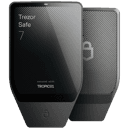
Trezor Safe 5
Certified chip and fully open firmware at the lowest price

Coldcard Q
Bitcoin-only signing with QR, dual microSD and two secure chips

BitBox02
Reproducible open firmware with published board files

Coldcard Mk5
Two-vendor secure elements and microSD air-gap for Bitcoin

Blockstream Jade Plus
Fully inspectable code and cable-free QR signing for Bitcoin

Ledger Nano Gen5
Named EAL6+ secure element with broad asset support
Sources
Scored from published primary sources rather than hands-on use. Every figure above comes from one of the pages below, on the date shown. Manufacturers change prices and specifications without notice — if something here no longer matches the source, tell us and we will correct it.
- 1.Keystone store: Keystone 3 Pro product page — checked
- 2.Keystone: supported crypto assets — checked
- 3.Keystone: firmware update page — checked
- 4.Keystone Guide: Rabby (QR and USB connection) — checked
- 5.GitHub: keystone3-firmware README (chips, hardware folder) — checked
- 6.GitHub: keystone3-firmware build and verify guide — checked
Frequently asked questions
Why does the Keystone 3 Pro score 9.6?
It averages five equally weighted marks: price 8 and 10 on each of the secure element, open source, air-gap and asset coverage criteria. That totals 48, and 48 divided by 5 is 9.6.
What holds the Keystone 3 Pro back?
Only price, at 8. The $149 device falls in the $130 to $160 band, and a microSD card is not included. Its secure element mark carries a caveat: Keystone's sources do not agree on the exact chip part numbers.
Which secure element chips does the Keystone 3 Pro use?
Keystone states three. Its firmware README names a DS28C50, a MAX32520 and an ATECC608A, while the store page names none. Another Keystone post and some published descriptions give a different list, so treat the exact parts as unconfirmed.
Did the score change in November 2026?
No. Every mark matched the current evidence, so the score stays at 9.6. The open-source mark is now also backed by the repository's hardware files and build-and-verify guide.
How does the Keystone 3 Pro compare with the Trezor Safe 5 and Coldcard Q?
The Trezor Safe 5 scores 8.4. It is cheaper with a certified chip, but it cannot sign air-gapped. The Coldcard Q scores 7.6, with equal security marks, but it is Bitcoin-only and lists at $369.
Nothing here is financial advice. Editorial policy · How we score · How we're funded.