Each category has its own published criteria, every service in it is scored against the same set, and the overall score is the plain average of those numbers. Figures come from the provider's own pages, cited and dated on each review. How we score.
19
Ranking categories
149
Services reviewed
753
Criteria scored
The highest-scoring service in every category
One row per ranking, showing whichever service currently scores highest in it. Each category is scored against its own criteria, so a 9.6 for a hardware wallet and a 9.6 for an exchange are not the same measurement — read along a row, not down the column.
The top-scoring service in each of our 19 ranking categories
Four crypto exchanges, Bitfinex, Binance, Kraken and Gemini, ranked on their published trading costs: fee disclosure, entry-tier rates, fee conditions and product coverage. Snapshot checked in November 2026.
Nine decentralized exchanges and DEX aggregators, scored on published fees, code licence, upgradeability, chain coverage and audit disclosure from primary sources checked for November 2026.
Nine on-chain perpetual futures venues, scored on published fees, funding and liquidation terms, core code licence, audits and risk documentation, from primary sources checked for November 2026.
Eight instant crypto exchangers ranked on what they publish: the fee, fixed-rate options, custody and KYC rules, refund policy and the operating company. Checked November 2026.
Ten crypto trading bots, terminals and Telegram bots ranked on published pricing, the exchange access they demand, venue coverage, security controls and who runs them. Checked November 2026.
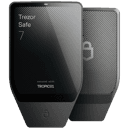
Seven hardware wallets ranked on list price, secure element, open-source firmware, air-gapped signing and asset coverage, scored from vendor stores, documents and GitHub repositories checked in November 2026.
Six self-custodial software wallets ranked on custody, open-source licensing, chain coverage, swap-fee disclosure and hardware pairing, scored from vendor documentation checked in November 2026.
Six staking platforms for ETH and SOL ranked on published commission, custody, operator spread, slashing disclosure and exit terms, scored from documentation and terms checked in November 2026.
Ten liquid staking tokens for ETH and SOL, ranked on fee disclosure, exit terms, operator decentralisation, code licence and audits. Marks checked on 1 November 2026 against primary sources.
Nine liquid restaking tokens and restaking layers, ranked on fee disclosure, slashing disclosure, exit terms, code licence and audits. Marks checked against primary sources on 1 November 2026.
Nine yield aggregators and vaults, ranked on fee disclosure, licence, audits, custody and strategy transparency. Displayed APY is not scored. The marks come from desk research checked in November 2026.
Nine on-chain crypto lending platforms, scored on fee disclosure, code licence, liquidation terms, governance timelocks and audit disclosure, from primary sources checked for November 2026.
The plumbing under the rest: protocols, cross-chain bridges and the dollar tokens everything settles in. Scored on contract security, reserves, and honesty about their own failure modes.
Nine DeFi protocols that fit no narrower category, from on-chain cover to tokenized assets and options venues, ranked on fees, licence, audits, backing and governance. Checked November 2026.
Nine cross-chain bridges, ranked on five published criteria: fee transparency, trust model disclosure, licence, chain coverage and audits. The marks come from desk research checked in November 2026.
Ten dollar stablecoins, from Gemini Dollar and USDC to Tether and Ethena USDe, ranked on reserve transparency, regulation, redemption rights, custody and backing clarity. Checked November 2026.
Eight NFT marketplaces ranked on published fees, creator royalty rules, contract licences, chains covered and named audits. OpenSea leads at 8.4 in our November 2026 check.
Two tools where NFTs and AI meet, the generative-art platform Art Blocks and the AI artist Botto, ranked on fee disclosure, buyer rights, data use, function and operator. Checked November 2026.
The firms chains and DAOs hire to design incentive programs, run their grants, distribute the rewards and judge whether the money worked. Scored on what they publish about their own programs.
Twelve firms that administer crypto grants, distribute on-chain rewards or evaluate incentive programs for chains and DAOs, scored on six published disclosure criteria at equal weight. Snapshot: November 2026.
Three crypto debit and rewards cards, from Nexo, Bitpanda and Crypto.com, scored on published fees, conversion cost, custody, availability and rewards terms. Checked November 2026.
Each of the 19 categories has its own set of four to six criteria, published in full on the category page above the services they apply to. Every provider in that category is scored 0–10 on the same criteria, all carrying equal weight, and the overall score is the plain average of those numbers rounded to one decimal place. Rankings run from the highest score down; where two services finish level they are listed alphabetically rather than separated silently.
The criteria differ between categories deliberately. A hardware wallet is scored on its secure element, what can be inspected in its firmware and how a transaction reaches it; a stablecoin on reserve transparency, redemption rights, supervision and custody; an instant exchanger on whether it names a fee, a rate lock or an operating entity at all. Judging them on one shared scorecard would mean scoring most of them on things that cannot be evidenced.
Where the facts come from
All 149 reviews are built from primary sources — the provider's own pricing, documentation and specification pages, the licence file in its repository, published audit reports and regulatory registers. Every review lists the exact pages used and the date each was read, so any figure can be traced and re-checked. Each review also states its basis: reviews marked primary sources are desk research and we do not claim otherwise.
What is deliberately not scored
A rubric is only worth having if every criterion is evidenced the same way, so anything we could not verify to that standard is left out rather than guessed at. The exchange ranking scores published trading costs and not custody or licensing; the stablecoin ranking scores documented reserve and licensing facts and not peg history or market depth. Where a category omits something important, its page says so and explains why. Where a provider publishes nothing on a criterion, that silence is scored as the absence it is.
Frequently asked questions
How independent are these ratings?
Fully editorial. This is a non-commercial project — no advertising, no sponsored placements, and no affiliate or referral links anywhere on the site. Nobody can pay to be ranked higher, and every overall score is the plain average of the criteria shown on each review.
How often are ratings updated?
Every review shows the date it was written and the date its sources were last read, and every ranking page carries a last-checked date. We re-check when a provider makes a material change we become aware of, rather than promising a fixed cycle we cannot guarantee.
Are the criteria the same in every category?
No. Each category has its own set of four to six criteria, published in full on its ranking page, because a hardware wallet and a stablecoin cannot be judged on the same things. Within a category every service is scored on the same criteria at equal weight, and the overall score is their plain average.
Can I compare scores between categories?
Not directly. A hardware wallet is scored on secure-element design and firmware transparency; a stablecoin is scored on its peg record and reserve disclosures. Both produce a number out of ten, but they measure different things, so a service is best read against the others in its own ranking rather than across the site.