
Ledger Nano Gen5 Review
Named EAL6+ secure element with broad asset support
of 10
The Ledger Nano Gen5 scores 7.0/10 on desk research of Ledger's product, comparison, asset and open-source pages. It earns 9s for a named ST33K1M5 chip certified to EAL6+ and for asset support. Partly closed firmware and connected-only signing cost it most.
Overall
7.0/10 = (7 + 9 + 5 + 5 + 9) / 5
Price
$179 (Ledger comparison guide, updated 5 Oct 2026)
Secure element
STMicroelectronics ST33K1M5, Common Criteria EAL6+
Connectivity
USB-C, Bluetooth LE 5.2, NFC; no QR camera or microSD
In the box
Device, USB-C cable, 3 recovery sheets, Ledger Recovery Key
Open source
Wallet app and SDK public; OS partly reviewable; SE low-level code closed
Scores
Each criterion carries equal weight. The overall score is the average of these 5 scores — (7.0 + 9.0 + 5.0 + 5.0 + 9.0) ÷ 5 = 7.0.
Pros
- Secure element 9: STMicroelectronics ST33K1M5 named, CC EAL6+ certified
- Asset coverage 9: 500+ assets in Ledger Wallet, thousands via third-party wallets
- Price 7: $179 with a Ledger Recovery Key card and three recovery sheets in the box
- Ledger Wallet, the Secure SDK and the on-device apps are public on GitHub
Cons
- Open source 5: low-level secure element code closed; no reproducible builds
- Air-gap 5: USB-C or Bluetooth only, with no QR or microSD signing path
- Product page showed no device-only price when checked; price from comparison guide
The Ledger Nano Gen5 scores 7.0 out of 10 in our hardware wallet ratings, rescored from current evidence on 1 November 2026. The basis is desk research: Ledger's product page, its signer comparison guide, its supported-assets page and its Academy explainer on open source, updated 20 October 2026. We did not test a device. The Gen5 scores well for a named, certified secure element and for broad asset support. It scores 5 on two criteria: the firmware is only partly open to inspection, and it cannot sign without a connection.
How the Nano Gen5 scores in hardware wallets
Five criteria apply in this category. Each is marked 0 to 10 and carries equal weight, as described in our ratings methodology.
| Criterion | What the published record shows | Mark |
|---|---|---|
| Price & value | $179 in Ledger's comparison guide (updated 5 October 2026); the box includes a Ledger Recovery Key card and three recovery sheets | 7 |
| Secure element | STMicroelectronics ST33K1M5, certified to Common Criteria EAL6+ | 9 |
| Open source | Ledger Wallet app (MIT), Secure SDK and on-device apps public; operating system "partially reviewable"; low-level secure element code closed; no reproducible builds documented | 5 |
| Air-gap & verification | USB-C, Bluetooth LE 5.2 and NFC; transactions reviewed on a 2.8-inch E Ink touchscreen; no QR or microSD path | 5 |
| Asset coverage | 500+ assets through Ledger Wallet per the product page; thousands more through third-party wallets | 9 |
The overall score is a plain average: (7 + 9 + 5 + 5 + 9) / 5 = 35 / 5 = 7.0.
Change from the previous scoring: open source rose from 3 to 5. The July review found no firmware published for inspection on the pages it checked. Ledger's Academy explainer, updated 20 October 2026, now sets out which layers are public and links their GitHub repositories. It also says which layer stays closed. The other four marks are unchanged, and the overall score moves from 6.6 to 7.0.
Correction: the previous review said Ledger designs its secure-element chips in-house. That was wrong. The ST33K1M5 is made by STMicroelectronics, and Ledger's own explainer refers to its agreement with that chip maker.
Strongest criteria: the chip and the asset list
Secure element (9)
Ledger names both the part, an ST33K1M5, and its certification, Common Criteria EAL6+. Being able to check both is what the criterion rewards. The Trezor Safe 5 now meets the same standard and also scores 9. The 10s go to designs with several independent chips: the Coldcards and the Keystone 3 Pro.
Asset coverage (9)
The product page lists more than 500 assets supported through Ledger Wallet. For anything outside the app it points to third-party wallets and speaks of thousands of coins and tokens, though Ledger says it does not guarantee those wallets' compatibility. That puts it level with Trezor and one point below Keystone's 5,500+ claim.
Price & value (7)
$179 falls in the category's $160 to $200 band. The mark rises to 7 because a backup accessory ships in the box: the Ledger Recovery Key, an NFC card that stores a copy of the recovery phrase behind its own PIN. Ledger calls the card a complement to the paper sheet, not a replacement. The product page itself loaded no device-only price when checked.
Weakest criteria: two deficiencies
Open source (5)
Ledger's explainer sorts its code into three groups:
- Public: Ledger Wallet under the MIT licence, the Wallet API, the Secure SDK with its crypto library, and the on-device blockchain apps.
- Partly public: the device operating system, which Ledger calls "partially reviewable and verifiable".
- Closed: the low-level code that drives the secure element's hardware blocks, which Ledger says its chip-supplier agreement prevents it from publishing.
The explainer documents no reproducible builds and does not address hardware design files. Outsiders therefore cannot rebuild the firmware and compare it with what runs on the device. Ledger says a third-party lab audits the whole operating system before each release. That is a different kind of assurance, and it relies on trusting the lab.
Air-gap & verification (5)
Every transaction reaches the Gen5 over USB-C or Bluetooth, and NFC is used for the Recovery Key. No QR camera or microSD route is listed, so a fully air-gapped workflow is not possible. Verification happens on the touchscreen, where Ledger says its Clear Signing and Transaction Check features show what is being signed. The same 5 applies to the BitBox02 and the Trezor Safe 5.
What the score does not cover
- Ledger Recover. The optional subscription splits encrypted key material among three custodians and needs an identity check to restore. It is a service choice, not a device criterion.
- Incident history. No criterion scores incidents. Ledger's own reports cover the 2020 customer-data leaks and the December 2023 Connect Kit library attack. They describe data exposure and malicious transactions that users signed, not extraction of keys from devices. Our phishing guide covers the follow-on scams.
- App services. On-ramps and dapp connections inside Ledger Wallet are not scored.
- Screen readability, battery and durability. We did not handle the device.
Nano Gen5 vs the closest rated peers
| Device | Price | Secure element | Open source | Air-gap | Assets | Overall |
|---|---|---|---|---|---|---|
| Trezor Safe 5 | 9 | 9 | 10 | 5 | 9 | 8.4 |
| Blockstream Jade Plus | 6 | 5 | 10 | 10 | 4 | 7.0 |
| Ledger Nano Gen5 | 7 | 9 | 5 | 5 | 9 | 7.0 |
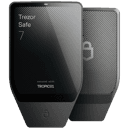
The Trezor Safe 5 is the closest like-for-like device. Both have a named EAL6+ chip, both use connected signing, and both have broad asset support. Trezor finishes 1.4 points ahead because its firmware is fully public with reproducible builds and it lists for $70 less. The Gen5 ties Blockstream Jade Plus at 7.0, and Jade is listed first alphabetically. The two are near opposites: Ledger is stronger on the chip and assets, Jade on open code and cable-free signing.
Who it suits
On the scored evidence, the Gen5 fits people who want a certified, named secure element and broad asset support, and who are content to sign over USB-C or Bluetooth. It also suits anyone who wants a backup card in the box. It is a weaker fit for anyone who wants to verify firmware themselves, or who needs to sign with no connection at all.
How it compares

Keystone 3 Pro
QR air-gapped signing with the widest asset coverage rated
Trezor Safe 5
Certified chip and fully open firmware at the lowest price

Coldcard Q
Bitcoin-only signing with QR, dual microSD and two secure chips

BitBox02
Reproducible open firmware with published board files

Coldcard Mk5
Two-vendor secure elements and microSD air-gap for Bitcoin

Blockstream Jade Plus
Fully inspectable code and cable-free QR signing for Bitcoin
Sources
Scored from published primary sources rather than hands-on use. Every figure above comes from one of the pages below, on the date shown. Manufacturers change prices and specifications without notice — if something here no longer matches the source, tell us and we will correct it.
- 1.Ledger shop: Nano Gen5 product page — checked
- 2.Ledger Academy: signer comparison (updated 5 Oct 2026) — checked
- 3.Ledger Academy: Is Ledger open source? (updated 20 Oct 2026) — checked
- 4.Ledger: supported crypto assets — checked
- 5.Ledger Academy: What is Ledger Recovery Key? — checked
- 6.Ledger blog: Connect Kit security incident report (20 Dec 2023) — checked
Frequently asked questions
Why does the Ledger Nano Gen5 score 7.0?
It averages five equally weighted marks: price 7, secure element 9, open source 5, air-gap 5 and asset coverage 9. That totals 35, and 35 divided by 5 is 7.0.
Is Ledger firmware open source?
Partly. Ledger's explainer says Ledger Wallet, the Secure SDK and the on-device apps are public. The operating system is partially reviewable, and the low-level secure element code is closed under its agreement with STMicroelectronics.
What changed in the November 2026 rescoring?
Open source rose from 3 to 5, because Ledger's updated explainer documents and links the parts that are public. The overall score moved from 6.6 to 7.0. We also corrected an earlier claim that Ledger designs its chips in-house.
What holds the Nano Gen5 back?
Two marks of 5. Outsiders cannot rebuild its firmware and match it with the device, and it has no QR or microSD route, so it cannot sign fully air-gapped.
How does the Nano Gen5 compare with the Trezor Safe 5 and Jade Plus?
The Trezor Safe 5 scores 8.4. It has the same chip standard and signing model, but its firmware is fully public and it is cheaper. Jade Plus ties the Gen5 at 7.0, with open code and QR signing, but no chip and Bitcoin and Liquid only.
Nothing here is financial advice. Editorial policy · How we score · How we're funded.