
Coldcard Mk5 Review
Two-vendor secure elements and microSD air-gap for Bitcoin
of 10
The Coldcard Mk5 scores 7.4/10 on desk research of Coinkite's pages, store and GitHub. Its two-vendor secure elements and reproducible firmware earn full marks. Its $269 list price and Bitcoin-only scope hold it back, and July 2026's seed-generation bug sits outside the rubric.
Overall
7.4/10 = (5 + 10 + 10 + 8 + 4) / 5
Price
$269 list, $219 on sale in Coinkite's store (1 Nov 2026)
Secure elements
Microchip ATECC608 and Maxim DS28C36B
Signing paths
microSD (air-gapped), NFC with PushTX, USB-C; no QR camera
Firmware
Reproducible builds; MIT + Commons Clause; 5.6.3 recommended
Assets
Bitcoin only
Scores
Each criterion carries equal weight. The overall score is the average of these 5 scores — (5.0 + 10.0 + 10.0 + 8.0 + 4.0) ÷ 5 = 7.4.
Pros
- Secure element 10: Microchip ATECC608 plus Maxim DS28C36B, two vendors
- Open source 10: reproducible builds, Mk5 schematic and BOM on GitHub
- Air-gap 8: full microSD signing, with NFC PushTX and USB-C as options
- Seeds made on 5.6.0+ firmware require user entropy (keys, dice or coins)
Cons
- Price 5: $269 list ($219 on sale on 1 Nov 2026); USB cable not included
- Asset coverage 4: Bitcoin only, by design
- No QR camera and one microSD slot, so air-gapped signing means moving a card
- July 2026 seed bug: seeds made before 5.6.0 must be migrated (not scored)
The Coldcard Mk5 scores 7.4 out of 10 in our hardware wallet ratings, rescored from current evidence on 1 November 2026. The basis is desk research of Coinkite's Coldcard pages, its store, its security status page and the Coldcard/firmware repository on GitHub. We did not test a device. The Mk5 shares the Coldcard Q's two-vendor chip design and its inspectable firmware, both marked 10. It loses ground on price, now listed at $269, and on asset coverage, because it is Bitcoin-only by design.
How the Coldcard Mk5 scores in hardware wallets
Five criteria apply in this category, each marked 0 to 10 and each worth one fifth of the total, as set out in our ratings methodology.
| Criterion | What the published record shows | Mark |
|---|---|---|
| Price & value | List price $269 in Coinkite's store, shown on sale at $219 on 1 November 2026; USB cable not included | 5 |
| Secure element | Two secure elements from different vendors: Microchip ATECC608 and Maxim DS28C36B | 10 |
| Open source | Firmware on GitHub with documented reproducible builds; Mk5 schematic and bill of materials in the repository; MIT plus Commons Clause licence | 10 |
| Air-gap & verification | Air-gapped signing by microSD (one slot); NFC and USB-C also offered; address and amount shown on screen; no QR camera | 8 |
| Asset coverage | Bitcoin only | 4 |
The overall score is a plain average: (5 + 10 + 10 + 8 + 4) / 5 = 37 / 5 = 7.4.
Change from the previous scoring: price and value fell from 7 to 5. The July review used a $189 list price. Coinkite's store now lists the Mk5 at $269, and the methodology scores the list price, not a sale price. The $219 sale price falls in the same band, so the mark would be 5 either way. The other four marks are unchanged, and the overall score moves from 7.8 to 7.4.
Strongest criteria: the chips and the code
Secure element (10)
Coinkite says the seed is held across two secure elements from different manufacturers, a Microchip ATECC608 and a Maxim DS28C36B. A flaw in one vendor's part is then not enough on its own to expose the seed. Neither chip is quoted with a Common Criteria level. The methodology credits independent multi-chip designs on their own terms, which is why the Mk5 scores above the single certified chips at 9.
Open source (10)
The firmware repository documents reproducible builds, so a release can be shown to match the source. Its hardware folder holds a schematic and a bill of materials for the Mk5 board revision. The licence is MIT with the Commons Clause, which allows anyone to read, build and modify the code but withholds the right to sell it. The criterion scores how much can be inspected, not the licence, so the mark stays at 10.
Weakest criteria: deficiency versus design choice
Asset coverage (4): by design
The Mk5 signs Bitcoin transactions only. Coinkite is a Bitcoin-only company and says so. Bitcoin-only devices score lower here by definition, and the Mk5 gets the same 4 as the Coldcard Q and the Bitcoin-and-Liquid Jade Plus.
Price & value (5): a measured deficiency
At a $269 list price, the Mk5 costs more than every multi-asset device in the category. The category's bands give 5 for $200 to $300. No backup accessory ships with it, and the store listings say the USB cable is not included.
Air-gap & verification (8)
A fully air-gapped workflow exists. A partially signed Bitcoin transaction (PSBT) travels on a microSD card, the device shows the address and amount, and the signed file returns the same way, with the device powered by a USB-C power source only. NFC with PushTX and a USB virtual-disk mode are also offered. The two points below the Q come from the missing QR camera and the single card slot: every air-gapped signature involves moving a card.
What the score does not cover
The rubric has no criterion for incident history, and the most important fact about the Mk5 this year falls outside it. On 30 July 2026 Coinkite disclosed a firmware bug that weakened seed generation. Its security status page, updated 1 October 2026, says attackers regenerated affected keys offline and stole funds. It also says devices were not remotely accessed. What Coinkite tells Mk5 owners:
- Seeds created on Mk4, Mk5 or Q firmware before the fixed releases are covered by the advisory.
- The minimum fixed release for the Mk5 is 5.6.0, and the recommended standard release is 5.6.3.
- Updating firmware does not repair an existing seed. Affected seeds must be replaced and the funds moved.
- A seed made with at least 50 fair, private dice rolls is not considered at risk from this bug alone.
The secure element mark scores the chips that store a seed, not how well the seed was generated, so it is unchanged. Readers should weigh the incident separately. Our guide to what protects your keys in a hardware wallet covers the parts of a hardware wallet's security that can fail. New units ship with corrected firmware, which the store says should be updated on receipt. Durability and support were also not assessed.
Coldcard Mk5 vs the closest rated peers
| Device | Price | Secure element | Open source | Air-gap | Assets | Overall |
|---|---|---|---|---|---|---|
| Coldcard Q | 4 | 10 | 10 | 10 | 4 | 7.6 |
| BitBox02 | 8 | 7 | 10 | 5 | 7 | 7.4 |
| Coldcard Mk5 | 5 | 10 | 10 | 8 | 4 | 7.4 |
The Coldcard Q runs the same security model. It scores 0.2 higher because QR signing lifts its air-gap mark by two points, which outweighs its one-point lower price mark ($369 list). The Mk5 ties the BitBox02 at 7.4, and the BitBox02 is listed first alphabetically. The BitBox02 is cheaper and covers more assets, while the Mk5 is stronger on the chips and on cable-free signing.
Who it suits
On the scored evidence, the Mk5 fits Bitcoin-only holders who want two independent secure elements and reproducible firmware, and who will sign over microSD. A numeric keypad is fine for most of them, though Coinkite notes that a long passphrase is easier to type on the Q's keyboard. It does not fit anyone holding other assets, anyone who wants QR signing, or anyone with a Coldcard seed created before the fixed firmware who has not yet migrated it.
How it compares

Keystone 3 Pro
QR air-gapped signing with the widest asset coverage rated
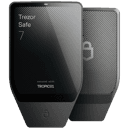
Trezor Safe 5
Certified chip and fully open firmware at the lowest price

Coldcard Q
Bitcoin-only signing with QR, dual microSD and two secure chips

BitBox02
Reproducible open firmware with published board files

Blockstream Jade Plus
Fully inspectable code and cable-free QR signing for Bitcoin

Ledger Nano Gen5
Named EAL6+ secure element with broad asset support
Sources
Scored from published primary sources rather than hands-on use. Every figure above comes from one of the pages below, on the date shown. Manufacturers change prices and specifications without notice — if something here no longer matches the source, tell us and we will correct it.
- 1.Coldcard: Mk5 product page — checked
- 2.Coldcard: Q vs Mk5 comparison — checked
- 3.Coinkite store: Mk5 listings and prices — checked
- 4.Coldcard: security status (updated 1 Oct 2026) — checked
- 5.Coldcard: Mk5 documentation — checked
- 6.GitHub: Coldcard/firmware (reproducible builds, hardware files, licence) — checked
Frequently asked questions
Why does the Coldcard Mk5 score 7.4?
It averages five equally weighted marks: price 5, secure element 10, open source 10, air-gap 8 and asset coverage 4. That totals 37, and 37 divided by 5 is 7.4.
Why did the Mk5's score fall from 7.8?
Its price mark went from 7 to 5. The July review used a $189 list price, and Coinkite's store now lists the Mk5 at $269. Even the $219 sale price falls in the $200 to $300 band, which scores 5.
Does the July 2026 seed-generation bug affect the score?
No criterion scores incident history, so the marks do not change. Coinkite says seeds created before firmware 5.6.0 should be replaced and the funds moved, because updating the firmware does not repair an existing seed.
What was actually measured?
Only published facts: the store's list price and contents, the chips Coinkite names, the GitHub repository's build and hardware files, the documented signing paths and the supported assets. No device was handled.
How does the Mk5 compare with the Coldcard Q and BitBox02?
The Coldcard Q scores 7.6, with the same security model plus QR signing, at a higher price. The BitBox02 ties the Mk5 at 7.4. It is cheaper and covers more assets, but it names no certified chip and cannot sign air-gapped.
Nothing here is financial advice. Editorial policy · How we score · How we're funded.